
At first glance, methanol and ethanol seem almost identical. Both are clear liquids. Both belong to the alcohol family. Both can be used as fuels, solvents, and industrial chemicals. Their names even sound alike.
Yet despite these similarities, methanol and ethanol are very different substances. One is found in alcoholic beverages and can be consumed responsibly by adults. The other is highly toxic and should never be consumed.
What makes this especially fascinating is that the difference between the two molecules is surprisingly small.
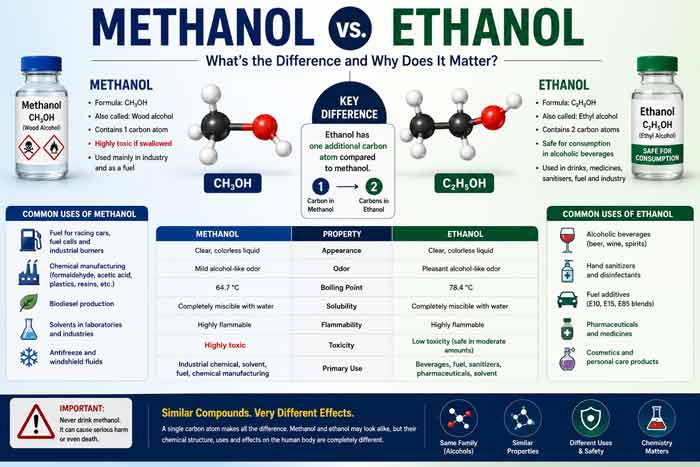
Ethanol contains just one additional carbon atom compared to methanol. That tiny change dramatically affects how the body processes them, how they are used, and how safe they are.
Understanding the difference between methanol and ethanol is important not only for chemistry students but also for anyone interested in science, fuels, manufacturing, health, and everyday products.
In this article, we’ll explore how these two alcohols compare, why one is safe to drink while the other is not, and how both play important roles in modern industry.
What is Methanol?
Methanol is the simplest alcohol molecule.
Its chemical formula is:
CH3OH
Methanol is often called wood alcohol because it was historically produced by heating wood.
Today, methanol is primarily manufactured from natural gas and other industrial feedstocks.
What is Ethanol?
Ethanol is another member of the alcohol family.
Its chemical formula is:
C2H5OH
Ethanol is commonly known as:
- Ethyl alcohol
- Grain alcohol
- Beverage alcohol
Unlike methanol, ethanol is the alcohol found in:
- Beer
- Wine
- Spirits
- Certain medicines
- Some food products
Ethanol is also used as a fuel and industrial solvent.
Molecular Structure: The Difference of One Carbon Atom
One of the most interesting facts about methanol and ethanol is how similar they are.
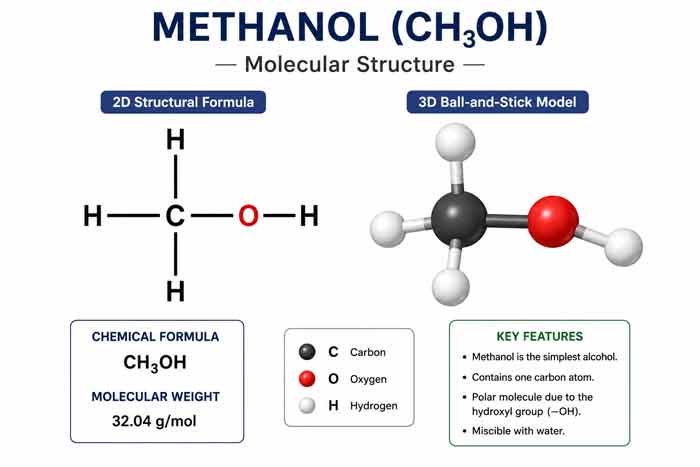
Methanol
Chemical Formula: CH3OH
Molecular Structure:
Ethanol
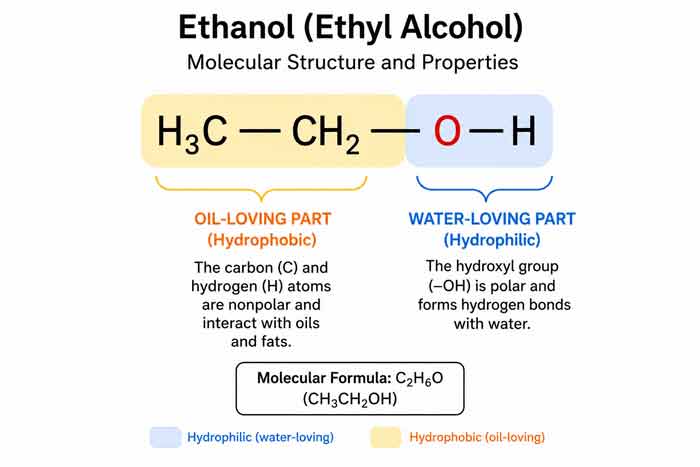
Chemical Formula: C2H5OH
Molecular Structure:
Why One Carbon Atom Matters
The only major structural difference is that ethanol contains one additional carbon atom and two additional hydrogen atoms.
That may seem insignificant.
However, in chemistry, small structural differences can produce dramatically different results.
This extra carbon atom affects:
- Toxicity
- Metabolism
- Industrial applications
- Physical properties
- Biological effects
It is one of the best examples of how molecular structure influences behavior.
Quick Comparison Table
| Property | Methanol | Ethanol |
| Chemical Formula | CH3OH | C2H5OH |
| Carbon Atoms | 1 | 2 |
| Common Name | Wood Alcohol | Ethyl Alcohol |
| Appearance | Clear liquid | Clear liquid |
| Odor | Mild alcohol odor | Mild alcohol odor |
| Fuel Use | Yes | Yes |
| Industrial Use | Extensive | Extensive |
| Beverage Use | No | Yes |
| Toxicity | Highly toxic | Beverage alcohol |
At first glance, these compounds look remarkably similar.
The biggest difference lies in how they interact with living organisms.
Physical Properties Compared
Although methanol and ethanol look similar, their physical properties differ slightly.
| Property | Methanol | Ethanol |
| Boiling Point | 64.7°C | 78.4°C |
| Melting Point | -97.6°C | -114.1°C |
| Density | Lower | Slightly higher |
| Solubility in Water | Complete | Complete |
| Flammability | High | High |
Both alcohols are:
- Colorless
- Flammable
- Water-soluble
- Volatile liquids
This similarity is one reason accidental confusion can be so dangerous.
Why People Often Confuse Methanol and Ethanol
There are several reasons.
First, their names sound alike.
Second, they belong to the same family of chemicals.
Third, they share many physical characteristics.
Both liquids are:
- Clear
- Colorless
- Alcohol-based
- Flammable
Without proper labeling and chemical analysis, they can appear almost identical.
Yet their effects are vastly different.
This is why understanding the distinction between them is so important.
Uses of Methanol
Despite its reputation for toxicity, methanol is one of the world’s most important industrial chemicals.
Millions of tons are produced every year because it serves as a building block for countless products.
Here are the major uses of methanol:
- Fuel
Methanol can be used as a fuel for:
- Racing vehicles
- Industrial burners
- Fuel cells
- Marine transportation
Because it burns efficiently, it has attracted attention as a possible alternative fuel.
- Chemical Manufacturing
A large portion of the world’s methanol production is used to make other chemicals, including:
- Formaldehyde
- Acetic acid
- Plastics
- Synthetic fibers
- Adhesives
- Resins
Many products found in homes and businesses begin with methanol somewhere in the manufacturing process.
- Biodiesel Production
Methanol plays a critical role in biodiesel production.
It reacts with vegetable oils and animal fats to create biodiesel, a renewable fuel source.
- Solvents and Industrial Applications
Methanol is also used as a solvent in:
- Laboratories
- Chemical plants
- Manufacturing facilities
Its ability to dissolve certain substances makes it useful in numerous industrial processes.
Uses of Ethanol
Ethanol is equally versatile but is known for very different reasons. Its uses include:
- Alcoholic Beverages
The most familiar use of ethanol is in:
- Beer
- Wine
- Spirits
- Liquors
Ethanol is the alcohol that people consume in alcoholic drinks.
- Hand Sanitizers
Many hand sanitizers contain ethanol because it helps reduce the spread of germs when used appropriately.
- Fuel
Ethanol is commonly blended with gasoline.
Examples include:
- E10 fuel
- E15 fuel
- E85 fuel
These blends help reduce dependence on petroleum.
- Pharmaceuticals
Ethanol is often used in:
- Medicines
- Tinctures
- Liquid pharmaceutical products
- Cosmetics and Personal Care Products
Many products contain ethanol, including:
- Perfumes
- Mouthwashes
- Hair products
- Cosmetic formulations
Why Methanol is Dangerous and Ethanol is Not
This is perhaps the most important difference between the two alcohols.
How the Body Processes Ethanol
When ethanol enters the body, it is broken down through a series of metabolic processes.
Although excessive consumption can be harmful, the body has evolved mechanisms to process moderate amounts of ethanol.
This is why ethanol can be safely consumed in alcoholic beverages by adults when used responsibly.
How the Body Processes Methanol
Methanol follows a very different pathway.
When the body breaks down methanol, it produces substances that are far more harmful than methanol itself.
These compounds can interfere with normal biological processes and damage sensitive tissues.
This is why methanol is considered highly toxic.
A Tiny Structural Difference with Huge Consequences
Remember that methanol and ethanol differ by only one carbon atom.
Yet that small molecular change completely alters how the body handles them.
This is one of chemistry’s most striking examples of how tiny structural differences can lead to dramatically different outcomes.
Methanol vs. Ethanol as Fuels
Both methanol and ethanol can serve as fuels.
However, they have different strengths and applications.
Methanol Fuel
Advantages:
- Burns cleanly
- Can be produced from multiple sources
- Useful in fuel cells
- Growing interest in marine transportation
Challenges:
- Toxicity concerns
- Lower energy content than gasoline
Ethanol Fuel
Advantages:
- Renewable production from crops
- Widely used in fuel blends
- Established infrastructure
Challenges:
- Requires agricultural resources
- Lower energy density than gasoline
The Future of Alternative Fuels
Researchers continue to explore both methanol and ethanol as part of the transition toward cleaner energy systems.
Each offers unique benefits depending on the application.
Common Myths about Methanol and Ethanol
Myth #1: All Alcohols Are Safe to Drink
False.
Only certain alcohols are suitable for consumption.
Methanol is not one of them.
Myth #2: Methanol and Ethanol Are Basically the Same
False.
Although their structures are similar, their effects and uses are very different.
Myth #3: Methanol Is Used Only as Fuel
False.
Methanol is an essential industrial chemical used to manufacture many products.
Myth #4: Ethanol Is Only Used in Beverages
False.
Ethanol is also widely used as:
- Fuel
- Solvent
- Pharmaceutical ingredient
- Cleaning agent
Myth #5: Chemistry Doesn’t Affect Everyday Life
False.
The differences between methanol and ethanol influence:
- Transportation
- Manufacturing
- Healthcare
- Consumer products
- Energy systems
Surprising Facts about Methanol and Ethanol
- Both belong to the alcohol family.
- Both are clear, colorless liquids.
- Both can be used as fuels.
- Both dissolve easily in water.
- Methanol contains one carbon atom.
- Ethanol contains two carbon atoms.
- Methanol was once produced primarily from wood.
- Ethanol is the alcohol found in beverages.
- Both play major roles in industrial chemistry.
- A single carbon atom creates one of the biggest safety differences in chemistry.
Which Alcohol is More Important?
The answer depends on perspective.
For Consumers
Ethanol is probably more familiar because of its presence in beverages, sanitizers, medicines, and fuel blends.
For Industry
Methanol is often considered one of the most important chemical feedstocks in the world because it helps produce countless other chemicals and materials.
For Energy
Both alcohols are important.
Scientists continue to study their roles in renewable fuels and cleaner energy systems.
Rather than competing, methanol and ethanol often serve different purposes.
Why Understanding the Difference Matters
At first glance, methanol and ethanol appear nearly identical.
They share many physical properties, belong to the same chemical family, and even have similar names.
Yet their differences are profound.
Understanding those differences helps people:
- Use products safely
- Appreciate industrial chemistry
- Understand fuel technologies
- Recognize the importance of molecular structure
Few examples demonstrate the power of chemistry more clearly than these two alcohols.
Conclusion
Methanol and ethanol may look alike, but they are far from identical. Methanol is a highly valuable industrial chemical used in fuels, manufacturing, and chemical production, while ethanol is best known as the alcohol found in beverages, sanitizers, and fuel blends.
The most fascinating part of their story is that such dramatically different properties arise from a very small structural change.
Ethanol contains just one additional carbon atom compared to methanol, yet that tiny difference completely changes how the body processes the molecule and how it is used in everyday life.
Together, methanol and ethanol illustrate one of chemistry’s most important lessons: small changes in molecular structure can have enormous effects.
Understanding these differences not only improves safety but also provides insight into the remarkable ways chemistry shapes the modern world.