
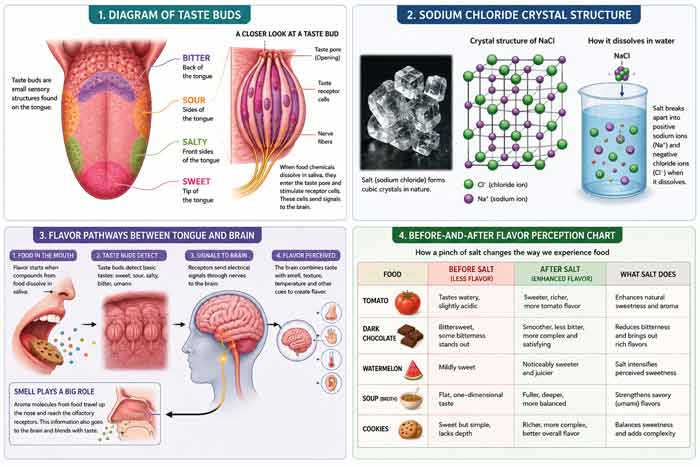
The Chemistry of Salt is one of the main reasons food tastes delicious instead of dull and lifeless.
A simple pinch of salt can completely transform a meal, making flavors stronger, richer, sweeter, and more balanced.
Whether it is sprinkled on fries, mixed into soup, or added to chocolate desserts, salt has a remarkable ability to improve the way food tastes.
But this is not just a cooking trick — it is science happening on your tongue.
Salt works by interacting with taste buds, flavor molecules, and even the brain itself.
It can reduce bitterness, enhance sweetness, strengthen savory flavors, and bring out aromas that might otherwise go unnoticed.
In fact, many foods do not taste fully “complete” until salt is added.
What makes this even more fascinating is that salt’s effects go far beyond flavor.
It also changes texture, helps preserve food, controls fermentation, and plays an important role in cooking chemistry.
From ancient civilizations to modern kitchens, salt has remained one of the most powerful ingredients humans have ever discovered.
In this article, we will explore the chemistry behind salt and uncover how such a tiny crystal has such a huge impact on the food we eat every day.
What Exactly Is Salt?
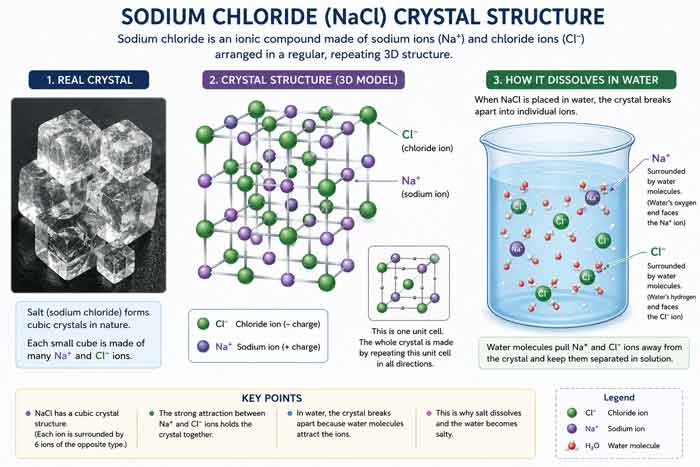
At its most basic level, salt is a mineral called sodium chloride.
That sounds complicated, but it is actually simple.
Sodium chloride is made of two parts: sodium and chloride.
- Sodium is a soft metal element.
- Chloride is a form of chlorine.
When they combine together, they form sodium chloride.
Sodium chloride is also called table salt or cooking salt. It is the salt we eat every day.
Its chemical formula is:
NaCl.
Salt is made of tiny crystal cubes that dissolve easily in water. Once dissolved, the sodium and chloride separate into tiny charged particles called ions.
These ions are the real stars of the show when it comes to taste because they interact directly with your taste buds.
Different Types of Salt
There are many kinds of salt, and although most are mainly made of sodium chloride, they differ in texture, crystal size, flavor, and how they are used in cooking.
Here they are:
- Table salt
This is the most common household salt. It has very fine crystals and often contains iodine, a mineral added to support thyroid health.
It dissolves quickly and gives an even salty taste.
- Sea salt
Sea salt is made by evaporating seawater. It usually contains small amounts of natural minerals that can slightly affect flavor and texture.
- • Kosher salt
This is a coarse-grained salt popular with chefs because it is easy to pinch and spread evenly over food.
It usually does not contain iodine.
- Himalayan pink salt
Himalayan pink salt is a pink-colored salt mined from ancient salt deposits in the Himalayan region.
Its color comes from trace minerals like iron.
- Flake salt
This is a light, flaky salt with thin crystals that crumble easily. It is often used as a finishing salt to add crunch and bursts of flavor on foods.
How Humans Taste Food
To understand why salt matters in cooking, we first need to understand how taste works.
Your tongue contains thousands of tiny structures called taste buds. Each taste bud has special cells that detect chemicals in food.
Therefore, these taste buds in the tongue help humans to taste foods.
The human taste buds can detect five basic tastes:
- Sweet
- Sour
- Bitter
- Salty
- Umami (savory or meaty flavor)
Flavor is More Than Taste
People often confuse taste with flavor, but they are not exactly the same thing, and here is the difference.
Taste comes from the tongue (the taste buds).
Flavor comes from:
- taste,
- smell,
- texture,
- temperature,
- and even sound.
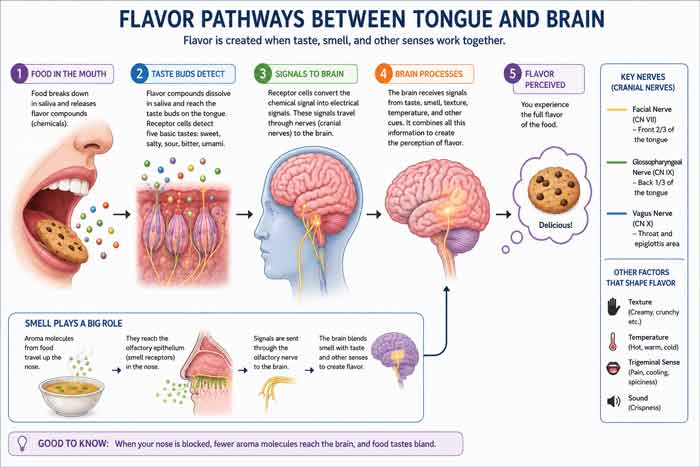
That is why food seems bland when you have a blocked nose. Your brain combines information from multiple senses, including smell, to create flavor.
How Taste Buds Work
When food enters your mouth, chemicals from the food dissolve in saliva.
These chemicals then touch taste receptor cells on your tongue.
The receptors send electrical signals to your brain, which interprets them as taste.
Also, by combining the taste with information from other sources, such as smell, texture of the food, temperature, etc. the brain gives an interpretation of the flavor.
Think of taste buds like tiny chemical detectors.
How Salt Makes Food Taste Better
Salt does much more than simply make food “salty.”
Its chemistry also extend to having the ability to change how your brain experience flavor, which makes your food to taste better.
Here are ways salt makes food taste better:
Salt Enhances Natural Flavors
One of salt’s biggest powers is flavor enhancement.
Salt makes foods taste more intense and more complete.
For example:
- Tomatoes taste more tomato-like
- Meat tastes meatier
- Potatoes taste richer
Salt does this partly by reducing unpleasant flavors and partly by boosting pleasant ones.
Salt Reduces Bitterness
Bitterness is useful in nature because it can warn us about poisonous substances.
But many healthy foods contain slight bitterness too. These include:
- Coffee
- Dark chocolate
- Broccoli
- Spinach
- Kale
Salt helps block some bitter taste signals on the tongue and make the food to taste better.
This is why:
- Salted coffee tastes smoother
- Salted dark chocolate tastes richer
- Vegetables often taste better when seasoned
Salt Makes Sweet Foods Taste Better
This surprises many people.
Even desserts often contain salt.
Why?
Because salt balances sweetness.
Without salt, sugary foods can taste flat or overwhelmingly sweet. A little salt creates contrast and complexity.
That is why salted caramel became so popular.
Salt Strengthens Umami
Umami is the deep savory taste found in:
- cheese,
- mushrooms,
- soy sauce,
- cooked meat,
- and broth.
Salt strengthens umami flavors, making foods taste fuller and more satisfying.
This is one reason soups and sauces need proper seasoning.
Salt Affects Aroma Too
Flavor is strongly connected to smell as discussed earlier.
Salt can change how aroma molecules are released from food, which indirectly affects flavor perception.
So, when chefs season food properly, they are not only improving taste — they are also improving aroma.
The Science behind Salt and the Tongue
Now, let us look at the chemistry happening inside your mouth.
When salt dissolves, it breaks apart into sodium ions and chloride ions.
The sodium ions interact with special channels in taste receptor cells.
These channels act like tiny gates.
When sodium enters the cells, it creates an electrical signal that travels to the brain.
The brain then recognizes the sensation as salty taste.
In simple terms:
- salt creates tiny electrical messages,
- and your brain translates those messages into flavor.
Pretty amazing for something sprinkled from a shaker.
Salt’s Role beyond Flavor
Salt does more than affect taste.
It also changes texture, preservation, and cooking chemistry.
Salt Changes Texture
Salt affects proteins and moisture inside food.
For example:
- salted meat often becomes juicier,
- bread dough becomes stronger,
- and fries become crispier.
When salt interacts with proteins, it changes how they hold water.
That is why salted meat can stay moist during cooking.
Salt Preserves Food
Before refrigerators existed, salt was one of humanity’s most important tools.
Salt helps preserve food because it removes water from bacteria and microbes.
Without enough water, many microorganisms cannot survive.
This is why salt was historically used to preserve:
- fish,
- meat,
- cheese,
- and pickled vegetables.
Salt Helps Fermentation
Salt also controls beneficial bacteria during fermentation.
Foods like:
- kimchi,
- pickles,
- sauerkraut,
- and some cheeses
depend on salt to create the right environment for good microbes to grow while harmful microbes stay away.
Why Timing Matters When Adding Salt
When you add salt can completely change the result of your cooking.
Salting Before Cooking
Adding salt early allows it to penetrate food.
For example, salting meat before cooking helps the salt move deeper inside, improving flavor throughout the meat.
This process is often called dry brining.
Salting During Cooking
Professional chefs often season in layers.
Instead of adding all the salt at the end, they add small amounts during cooking.
This builds balanced flavor gradually.
Salting After Cooking
Finishing salts are added right before serving.
These salts add:
- texture,
- crunch,
- and little bursts of intense flavor.
Flake salt on steak or chocolate cookies is a good example.
When Salt Goes Wrong
Salt improves flavor — but too much can ruin food.
Oversalting Food
When there is too much salt:
- bitterness disappears completely,
- subtle flavors become hidden,
- and food tastes harsh.
Instead of enhancing flavor, salt overwhelms it.
Can You Fix Salty Food?
Sometimes.
How to Reduce Too Much Salt in Food
You can reduce saltiness in food by:
- adding more liquid,
- increasing the amount of food,
- adding acid like lemon juice,
- or adding fat such as cream or butter.
Contrary to popular belief, adding potatoes does not magically “absorb” all the salt.
Common Myths about Salt
Here are common myths about salt and the actual truth:
“Sea Salt Is Much Healthier”
Most salts contain similar amounts of sodium.
Sea salt may contain tiny mineral amounts, but nutritionally the difference is usually small.
“Pink Salt Has Magical Powers”
Himalayan pink salt contains trace minerals, but the amounts are extremely tiny.
It is not a miracle health product.
“Salt Is Only for Savory Foods”
Not true.
Salt improves desserts too by balancing sweetness and enhancing flavor complexity.
“You Can Always Taste Too Much Sodium”
Not always.
Many processed foods contain large amounts of sodium even when they do not taste especially salty.
The Health Side of Salt
Salt is necessary for life.
Your body needs sodium for:
- nerve signals,
- muscle movement,
- and fluid balance.
Without sodium, the body cannot function properly.
The Problem with Too Much Salt to Health
Although salt is essential, excessive sodium intake can contribute to:
- high blood pressure,
- heart disease,
- and other health problems.
The biggest issue is usually processed food, not home cooking.
Foods like:
- instant noodles,
- chips,
- processed meats,
- and fast food
often contain surprisingly large amounts of sodium.
Finding Balance
The goal is balance, not fear.
You do not need to eliminate salt completely. Instead:
- cook more fresh foods,
- taste before salting,
- and use seasoning thoughtfully.
Salt Fun Experiments You Can Try at Home
Science becomes more interesting when you can taste it yourself.
Experiment 1: Salt and Watermelon
Sprinkle a tiny amount of salt on watermelon.
Notice how the sweetness becomes stronger.
Experiment 2: Salt and Coffee
Try coffee with:
- no salt,
- and a tiny pinch of salt.
You may notice reduced bitterness.
Experiment 3: Compare Salt Types
Taste:
- table salt,
- flaky salt,
- and kosher salt.
Pay attention to texture and how quickly flavor appears.
Experiment 4: Salted Chocolate
Try dark chocolate with a few flakes of salt.
You may notice:
- stronger sweetness,
- richer cocoa flavor,
- and less bitterness.
Surprising Facts about Salt
Here are amazing facts about salt you may not have known:
Salt Was Once Extremely Valuable
In ancient times, salt was so important that it was traded like currency.
Some workers were even partly paid in salt.
The word “salary” may come from ancient payments connected to salt.
Humans Naturally Crave Salt
Your body requires sodium to survive, which is one reason humans developed a natural attraction to salty foods.
Airplane Food Tastes Different
At high altitude, dry air and cabin pressure reduce taste sensitivity.
This is why airplane food often tastes bland and needs extra seasoning.
Salt Helped Build Civilizations
Entire trade routes and cities developed around salt production and trade.
Salt shaped economies long before modern refrigeration existed.
Frequently Asked Questions (FAQs)
Here are frequently asked questions about salt and their answers:
- How does salt make food taste better?
Salt enhances natural flavors while reducing bitterness. It also strengthens sweet and savory tastes, making food taste richer and more balanced.
- How does salt affect taste buds?
When salt dissolves in saliva, it releases sodium ions that interact with special receptors on the tongue. These receptors send signals to the brain, which interprets the sensation as salty taste.
- Why does food taste bland without salt?
Without salt, many natural flavors remain muted. Salt helps amplify flavor molecules and balance tastes, which is why unsalted food can seem flat or dull.
- Does salt only make food salty?
No. Salt does much more than add saltiness. It can reduce bitterness, increase sweetness, strengthen umami (savory flavor), and improve overall flavor balance.
- Why do desserts contain salt?
Salt balances sweetness and adds complexity to desserts. A small amount can make chocolate, caramel, cookies, and cakes taste richer and more flavorful.
- What is the chemical name for table salt?
The chemical name for table salt is sodium chloride.
NaCl
It is made of two elements: sodium and chlorine.
- Is sea salt healthier than table salt?
Sea salt and table salt contain similar amounts of sodium. Sea salt may contain tiny amounts of minerals, but the nutritional difference is usually very small.
- Why do chefs prefer kosher salt?
Many chefs like kosher salt because its larger crystals are easier to pinch, control, and spread evenly during cooking.
- Can too much salt ruin food?
Yes. Too much salt can overpower other flavors and make food unpleasantly harsh. Good seasoning is about balance, not simply adding more salt.
- Why does salt help preserve food?
Salt removes moisture from food and from microorganisms like bacteria. Without enough water, many microbes cannot grow, which helps food last longer.
Conclusion
Salt may look simple, but it performs incredible chemistry every time we eat.
It enhances sweetness, reduces bitterness, strengthens savory flavors, changes texture, preserves food, and even affects aroma.
Tiny sodium ions interact directly with your taste buds and help your brain experience food more intensely.
That is why a small pinch of salt can completely transform a meal.
The next time you season food, remember: you are not just cooking.
You are using chemistry to shape flavor itself.