
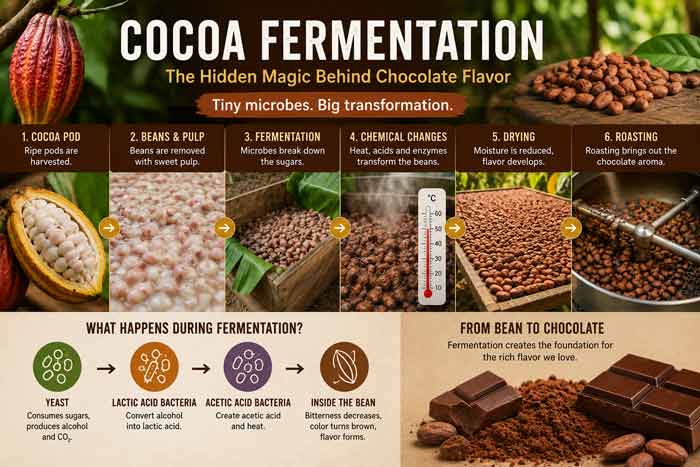
Cocoa fermentation is the hidden process that gives chocolate its rich flavor, deep aroma, and smooth taste.
Most people imagine chocolate beginning in factories filled with machines and wrappers, but the real journey starts on tropical cocoa farms where freshly harvested cocoa beans undergo a remarkable natural transformation.
Surprisingly, raw cocoa beans do not naturally taste like chocolate at all.
They are bitter, sour, and harsh until fermentation changes them through a series of powerful chemical reactions.
During cocoa fermentation, tiny microorganisms, such as yeast and bacteria feed on the sugary pulp surrounding cocoa beans.
As they consume sugars, they create heat, acids, and flavor compounds that slowly transform the beans from bitter seeds into the foundation of chocolate.
This process changes not only the flavor of cocoa, but also its smell, texture, color, and overall quality.
What makes cocoa fermentation so fascinating is that it combines chemistry, biology, farming, and food science in a way most people never see.
The chocolate flavor we love actually begins long before roasting, grinding, or adding sugar.
It starts with microbes doing invisible work inside piles of fermenting cocoa beans.
In this article, we will explore how cocoa fermentation works, the chemistry behind the process, why it is essential for chocolate flavor, and how tiny microorganisms help create one of the world’s favorite foods.
What Is Cocoa Fermentation?
Cocoa fermentation is a natural process where microorganisms break down the sugary pulp around cocoa beans.
As the microbes feed on sugar, they produce:
- alcohol,
- acids,
- heat,
- and flavor compounds.
These changes slowly transform bitter raw beans into cocoa beans capable of producing chocolate flavor.
A Simple Way to Think About It
Imagine fermentation as nature’s version of slow cooking.
Tiny microbes act like invisible chefs:
- breaking apart chemicals,
- creating new compounds,
- and reshaping flavor from the inside out.
The process may look messy on the outside, but inside the beans, remarkable chemistry is taking place.
From Cocoa Pod to Fermentation Box
Inside a Cocoa Pod
Cocoa grows inside large pods attached to cacao trees.
Inside each pod are:
- cocoa beans,
- surrounded by sweet, sticky white pulp.
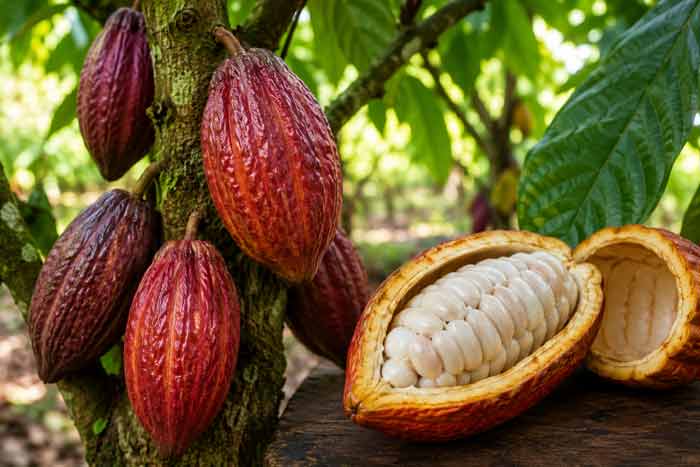
That sugary pulp is extremely important because it feeds the microbes that start fermentation.
Without the pulp, fermentation would not happen properly.
Harvesting Cocoa
Farmers harvest ripe cocoa pods by hand.
After opening the pods, they scoop out the wet beans and pulp together.
At this stage:
- the beans are pale,
- very bitter,
- and completely unlike chocolate.
The real transformation begins only after fermentation starts.
How Cocoa Fermentation Begins
The fermentation process starts with the fresh beans piled into:
- wooden boxes,
- baskets,
- or heaps covered with banana leaves.
Almost immediately, naturally occurring microbes begin feeding on the sugary pulp.
Fermentation starts within hours.
As microbial activity increases:
- temperature rises,
- acids form,
- and the beans begin changing chemically.
The Chemistry behind Cocoa Fermentation
Now, let’s look at the chemistry that takes place in the fermentation of cocoa.
Fermentation happens in stages.
Different microbes dominate at different times.
Stage 1: Yeast and Sugar Breakdown
At the beginning, yeast consumes sugars in the pulp.
This creates:
- alcohol,
- and carbon dioxide gas.
The simplified reaction looks like this:
C6H12O6 → 2C2H5OH + 2CO2
In simple terms:
Sugar → Alcohol + Gas
This is similar to what happens during beer fermentation.
Stage 2: Bacteria Produce Acids
Next, bacteria begin converting alcohol into acids.
Some bacteria create:
- lactic acid,
- while others create acetic acid (the acid found in vinegar).
These acids penetrate the cocoa beans and trigger important chemical changes inside.
Heat: The Hidden Ingredient in Fermentation
One surprising part of cocoa fermentation is heat.
As microbes work, temperatures inside fermentation piles can rise dramatically.
The heat helps:
- kill the bean embryo,
- activate enzymes,
- and start flavor-forming reactions.
In some fermentations, temperatures can become very warm — almost like a compost pile.
What Happens Inside the Cocoa Bean?
This is where chocolate flavor truly begins.
Inside the bean:
- proteins break apart,
- sugars change,
- bitterness decreases,
- and flavor precursors form.
Flavor precursors are compounds that later develop into chocolate aroma during roasting. They include free amino acids, peptides, and reducing sugars, majorly glucose and fructose.
Without these precursors, roasted cocoa would not smell or taste like chocolate.
The Microbes That Make Chocolate Possible
The microorganisms that are involved in cocoa fermentation, resulting in chocolate are:
Yeast
Yeast dominates the early stage of fermentation.
It feeds on sugars and produces alcohol.
Yeast also helps create fruity and floral flavor notes.
Lactic Acid Bacteria
These bacteria produce lactic acid.
They contribute:
- sourness,
- flavor complexity,
- and acidity balance.
Acetic Acid Bacteria
These bacteria convert alcohol into acetic acid.
They generate heat and help complete the fermentation process.
Too much acetic acid, however, can make chocolate taste harsh or overly acidic.
Why Fermentation Changes Chocolate Flavor
Fresh cocoa beans are naturally:
- bitter,
- astringent,
- and harsh.
Fermentation softens these unpleasant flavors.
Reducing Bitterness
Certain bitter compounds break down during fermentation.
This makes the beans smoother and less aggressive in flavor.
Creating Chocolate Aroma
Fermentation creates the chemical building blocks of chocolate aroma, as earlier said, which includes free amino acids, peptides, glucose, and fructose.
Later, during roasting, these compounds react further and produce the recognizable smell of chocolate.
This is why raw cocoa beans do not smell strongly chocolatey before fermentation and roasting.
Fruity, Floral, and Nutty Notes
Different fermentation conditions can create different flavor profiles.
Well-fermented cocoa may develop notes described as:
- fruity,
- floral,
- nutty,
- earthy,
- caramel-like,
- or wine-like.
This is especially important in premium craft chocolate.
Fermentation and Roasting: A Flavor Partnership
Fermentation alone does not fully create chocolate flavor.
Roasting is also essential.
The Maillard Reaction: Why Roasted Cocoa Smells Amazing
During roasting, heat causes sugars and amino acids to react.
This process is called the Maillard reaction.
It is responsible for:
- browning,
- rich aromas,
- and roasted flavors.
The simplified idea is:
Sugars + Amino Acids → Flavor and Aroma Compounds
This reaction also happens in:
- bread crusts,
- coffee,
- roasted meat,
- and chocolate.
How Farmers Control Cocoa Fermentation
Fermentation may be natural, but skilled farmers carefully manage it.
Fermentation: Time Matters
In carrying out fermentation, farmers know that time matters.
Most cocoa ferments for several days.
Too little fermentation creates:
- bitter,
- flat,
- underdeveloped flavors.
Too much fermentation can create:
- moldy,
- rotten,
- or overly acidic flavors.
Turning the Beans
Farmers often mix or turn the beans during fermentation.
This:
- adds oxygen,
- spreads heat evenly,
- and improves consistency.
Weather and Environment
Farmers also know that rain, humidity, and temperature can strongly affect fermentation quality.
Fermentation is both science and craftsmanship.
What Happens When Cocoa Fermentation Goes Wrong?
When not done properly, cocoa fermentation can go wrong and not give the desired chocolate.
Under-Fermented Cocoa
Under-fermented beans often remain:
- purple,
- bitter,
- and overly acidic.
Chocolate made from these beans may taste sharp and unbalanced.
Over-Fermented Cocoa
Too much fermentation can lead to:
- unpleasant sourness,
- mold,
- or rotten flavors.
Note: Good fermentation requires balance.
Cocoa Fermentation around the World
Different regions produce different chocolate flavors partly because fermentation methods vary.
West Africa
In West Africa, countries like:
- Ghana,
- Nigeria,
- and Ivory Coast
produce large amounts of cocoa for global chocolate production.
Latin America
Also, in Latin America, countries like Ecuador often produce fine-flavor cocoa with:
- fruity,
- floral,
- and delicate notes.
Asia
Indonesia and other Southeast Asian regions have unique fermentation traditions that influence flavor style.
Why Chocolate Lovers Should Care About Fermentation
Fermentation is one reason premium chocolate tastes different from cheap chocolate.
Better fermentation creates:
- deeper flavor,
- smoother bitterness,
- and more complex aromas.
Craft chocolate makers often pay close attention to fermentation quality because it dramatically affects the final product.
The Science of Chocolate Smell and Flavor
Chocolate contains hundreds of aroma compounds.
Your nose plays a huge role in chocolate flavor perception.
That is why chocolate seems richer when you smell it before tasting.
Why Chocolate Melts So Nicely in Your Mouth
Chocolate contains cocoa butter, a fat that melts close to body temperature.
When you eat chocolate, your body temperature easily melt this fat.
This fat gives chocolate its smooth melting sensation in the mouth.
Why Dark Chocolate Tastes More Intense
Dark chocolate usually contains:
- more cocoa solids,
- less sugar,
- and stronger flavor compounds.
Fermentation quality becomes especially noticeable in dark chocolate because less sugar hides the bean’s natural flavors.
Fun Chocolate Experiments You Can Try
Here are fun experiments with chocolate you can try at home:
Experiment 1: Smell Different Chocolates
Compare:
- milk chocolate,
- dark chocolate,
- and premium chocolate.
Notice differences in aroma.
Experiment 2: Let Chocolate Melt Slowly
Allow chocolate to melt slowly on your tongue.
Observe how flavors change over time.
Experiment 3: Compare Cheap vs. Premium Chocolate
Pay attention to:
- bitterness,
- aroma,
- smoothness,
- and flavor complexity.
You may notice how better fermentation creates more interesting flavors.
Surprising Facts about Cocoa Fermentation
Here are interesting facts you may not know about cocoa fermentation:
- Chocolate flavor barely exists inside fresh cocoa beans.
- Cocoa fermentation can become surprisingly hot.
- Coffee also depends heavily on fermentation.
- Some chocolate makers carefully manage microbes like winemakers manage yeast.
- Fermentation is one reason chocolate flavors differ around the world.
Common Myths about Cocoa and Chocolate
Common myths about chocolate include:
“Chocolate Comes Straight from Cocoa Beans”
Not exactly.
Fresh cocoa beans taste very different from finished chocolate.
“Fermentation Means Spoilage”
No.
Controlled fermentation is safe and essential for flavor development.
“All Chocolate Tastes the Same”
Different cocoa varieties and fermentation methods create huge flavor differences.
Frequently Asked Questions (FAQs) About Cocoa Fermentation
Here are commonly asked questions about cocoa fermentation and their answers:
- What is cocoa fermentation?
Cocoa fermentation is a natural process where microorganisms break down the sugary pulp surrounding cocoa beans.
This process creates chemical changes that help develop chocolate flavor, aroma, and color.
- Why is cocoa fermentation important?
Without fermentation, cocoa beans would taste extremely bitter and would not develop the rich chocolate flavor people enjoy.
Fermentation is one of the most important steps in chocolate production.
- How long does cocoa fermentation take?
Cocoa fermentation usually lasts between 3 and 7 days, depending on the type of cocoa, climate, and fermentation method used by farmers.
- What microorganisms are involved in cocoa fermentation?
Several microorganisms take part in cocoa fermentation, including:
- yeast,
- lactic acid bacteria,
- and acetic acid bacteria.
Each group helps create different flavor and chemical changes inside the beans.
- Why do cocoa beans become hot during fermentation?
As microbes break down sugars, they release energy in the form of heat.
This causes fermentation piles or boxes to become warm, which helps important flavor-forming reactions to happen inside the beans.
- What happens if cocoa beans are not fermented properly?
Poor fermentation can lead to chocolate that tastes:
- bitter,
- sour,
- flat,
- moldy,
- or unpleasant.
Good fermentation is essential for high-quality chocolate.
- Does cocoa fermentation create alcohol?
Yes. During the early stage of fermentation, yeast converts sugars into alcohol and carbon dioxide.
C6H12O6 →2C2H5OH + 2CO2
Later, bacteria convert some of the alcohol into acids.
- Why does fermentation affect chocolate flavor?
Fermentation creates flavor precursors — chemical compounds that later develop into chocolate aroma and taste during roasting.
It also reduces bitterness and improves flavor complexity.
- Do all countries ferment cocoa the same way?
No. Different countries and farms use different fermentation methods, fermentation times, and environmental conditions. This is one reason chocolate flavors vary around the world.
- Can you eat fresh cocoa beans before fermentation?
Yes, but they taste very different from chocolate. Fresh cocoa beans are usually bitter, sour, and slightly fruity because the chocolate flavor has not developed yet.
Conclusion
Cocoa fermentation is one of the most important hidden steps in chocolate making.
Tiny microbes transform bitter raw beans into flavorful cocoa capable of becoming delicious chocolate.
During fermentation, chemistry reshapes the beans by creating acids, heat, aroma compounds, and flavor precursors that later develop during roasting.
Without fermentation, chocolate as we know it would not exist.
The next time you eat a piece of chocolate, remember:
Behind that smooth, rich flavor is an invisible world of microbes and chemistry working together long before the chocolate reached your hands.