
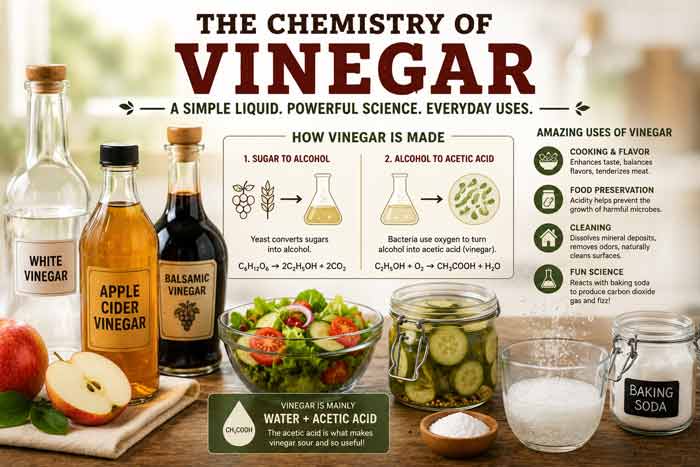
The Chemistry of Vinegar explains why this simple sour liquid can do so many surprising things in everyday life.
Vinegar is much more than a salad dressing ingredient sitting quietly in kitchen cabinets.
It can preserve food, brighten flavors, react dramatically with baking soda, dissolve mineral deposits, and even help with household cleaning.
Behind its sharp smell and tangy taste is a fascinating world of fermentation, acids, and chemical reactions happening at a microscopic level.
Most people use vinegar regularly without realizing how it is made or why it works so well.
Vinegar begins as sugars found in fruits, grains, or other foods.
Through fermentation, tiny microorganisms first turn those sugars into alcohol, and then special bacteria convert the alcohol into acetic acid — the compound responsible for vinegar’s sourness.
This natural transformation is one of the oldest forms of chemistry humans have ever used.
What makes vinegar especially interesting is how many areas of daily life it touches.
It changes the taste of food, helps preserve vegetables, softens marinades, and creates fizzy reactions in science experiments.
From ancient civilizations to modern kitchens, vinegar has remained one of the world’s most useful and versatile liquids.
In this article, we will explore the chemistry behind vinegar, how fermentation creates it, why it tastes sour, how it interacts with food and cleaning materials, and the science hidden inside every bottle.
What Exactly is Vinegar?
Vinegar is a sour liquid made through fermentation.
Its main ingredient is acetic acid, which gives vinegar:
- its sour taste,
- strong smell,
- and acidic properties.
Most vinegar contains:
- water,
- acetic acid,
- and small amounts of flavor compounds depending on the source material.
What Is Acetic Acid?
Acetic acid is the chemical responsible for vinegar’s sharp taste and smell.
Its formula looks like this:
CH3COOH
That may look complicated, but the important thing to know is simple:
Acetic acid belongs to a group of chemicals called acids, and acids are responsible for sour flavors.
Why Vinegar Tastes Sour
Your tongue contains special receptors that detect acids.
When acidic foods touch your tongue:
- those receptors send signals to the brain,
- and your brain interprets the sensation as sourness.
Acids generally taste sour.
The stronger the acid concentration, the sharper the sour taste usually becomes.
That is why vinegar tastes much more intense than water.
How Vinegar is Made
Vinegar production happens in two major stages.
Interestingly, vinegar actually begins with alcohol.
Step 1: Sugar Becomes Alcohol
First, yeast consumes sugars and converts them into alcohol and carbon dioxide gas.
The reaction looks like this:
C6H12O6 → 2C2H5OH + 2CO2
In simple terms:
Sugar → Alcohol + Gas
This is the same type of fermentation used in:
- beer,
- wine,
- and bread making.
Step 2: Alcohol Becomes Vinegar
Next, special bacteria convert alcohol into acetic acid.
This reaction requires oxygen.
C2H5OH + O2 → CH3COOH + H2O
In simple language:
Alcohol + Oxygen → Vinegar
This is the step that gives vinegar its sourness.
The Tiny Microbes behind Vinegar Production
The bacteria responsible for vinegar production are called acetic acid bacteria.
These bacteria:
- feed on alcohol,
- use oxygen,
- and produce acetic acid.
Without them, vinegar would not exist.
Different Types of Vinegar
There are different types of vinegar, as they don’t all taste the same.
This is because different ingredients involved in the production of vinegar create different flavors and aromas.
Here are the different types of vinegar:
White Vinegar
White vinegar is usually:
- clear,
- sharp,
- and strongly acidic.
It is commonly used for:
- cleaning,
- pickling,
- and cooking.
Apple Cider Vinegar
Apple cider vinegar is made from fermented apples.
It has:
- a milder flavor,
- fruity notes,
- and a slightly sweeter aroma.
It became especially popular because of health trends.
Balsamic Vinegar
Balsamic vinegar is dark, rich, and slightly sweet.
Some versions are aged for years, which create deeper flavor complexity.
Rice Vinegar
Rice vinegar is commonly used in Asian cooking.
It is usually milder and less harsh than white vinegar.
Malt and Wine Vinegar
These vinegars come from:
- fermented grains,
- or wines.
Their flavor depends heavily on the original ingredient.
Uses of Vinegar
Vinegar has multiple uses that cut across various fields, including cooking and cleaning.
The Chemistry of Vinegar in Cooking
Vinegar is not just sour for the sake of being sour.
It changes how food tastes.
Why Vinegar Makes Food Taste Better
Vinegar makes food to taste better because of its acidic nature,
Acidity helps balance flavors.
Vinegar can:
- brighten dull foods,
- reduce heaviness,
- balance sweetness,
- and cut through fatty flavors.
That is why a small splash of vinegar can completely change a soup, sauce, or salad dressing.
Vinegar and Pickling
Vinegar is one of the oldest food preservation tools humans discovered.
Its acidity makes life difficult for many harmful microorganisms.
That is why pickled foods can last much longer than fresh foods.
Examples include:
- pickled cucumbers,
- onions,
- peppers,
- and carrots.
Vinegar as a Meat Tenderizer
Acids affect proteins in meat.
When vinegar is used in marinades:
- proteins begin to break down,
- texture softens,
- and flavors penetrate more deeply.
Too much vinegar, however, can make meat mushy.
Vinegar and Baking Soda: Why the Reaction Fizzes
One of the most famous vinegar experiments involves baking soda.
When vinegar and baking soda mix, they produce carbon dioxide gas.
The reaction looks like this:
CH3COOH + NaHCO3 → CO2 + H2O + CH3COONa
That fizzing and bubbling happens because carbon dioxide gas rapidly escapes.
This same reaction helps baked goods become fluffy.
Why Vinegar Is Used for Cleaning
Vinegar is acidic, which makes it useful for dissolving certain materials and taking them off surfaces.
This process cleans up the surfaces.
Vinegar is Helpful — but Not Magical
Some people treat vinegar as a miracle cleaner.
It is useful, but it cannot clean everything safely.
For example:
- vinegar should not be used on some natural stones,
- and it is not a replacement for disinfectants in every situation.
Removing Mineral Deposits
Hard water often leaves behind minerals like calcium deposits on surfaces.
Vinegar reacts with these minerals and helps dissolve them.
The chemical equation below shows what happens:
CaCO3 + 2CH3COOH → Ca(CH3COO)2 + H2O + CO2
Where:
CaCO3 is calcium carbonate, the hard calcium mineral to be removed.
CH3COOH is acetic acid in the vinegar.
Ca(CH3COO)2 is calcium acetate (dissolved calcium).
H2O is water.
CO2 is carbon dioxide gas that bubbles out from the reaction.
That is why people use vinegar to clean:
- kettles,
- shower heads,
- and faucets.
Vinegar and Odors
Vinegar can help reduce some unpleasant smells because acids can interact with odor-causing compounds.
Vinegar and Food Preservation
Before refrigerators existed, vinegar helped people preserve food for longer periods.
Its acidity slowed the growth of many harmful microorganisms.
This helped communities store vegetables and foods during difficult seasons.
The Health Side of Vinegar
It is believed that vinegar also have some health benefits as some studies suggest vinegar may influence:
- blood sugar response,
- appetite,
- and digestion.
However, vinegar should be consumed carefully.
Too Much Vinegar Can Cause Problems
Excessive vinegar intake may:
- irritate the stomach,
- damage tooth enamel,
- or cause discomfort because of its acidity.
Balance is important.
Vinegar around the World
Different cultures developed different kinds of vinegar.
Asia
In Asia, we have:
- Rice vinegar
- Black vinegar
Europe
In Europe, there are:
- Balsamic vinegar
- Wine vinegar
Americas
Americas make:
- Apple cider vinegar
- Pickling vinegar traditions
Africa and the Middle East
In Africa and the Middle East, we have:
- Fermented grain and fruit vinegars
- Traditional preservation methods
Vinegar became part of global food culture because fermentation happened almost everywhere humans lived.
Common Myths about Vinegar
The following are common myths people have about vinegar:
“Vinegar Can Cure Everything”
Vinegar may have useful properties, but it is not a magical cure-all.
“All Vinegar Tastes the Same”
Different ingredients and fermentation methods create very different flavors.
“Natural Vinegar Never Spoils”
Although vinegar is acidic, contamination can still happen over time.
“Apple Cider Vinegar Is Automatically Healthier”
No single vinegar is a miracle health product.
Fun Vinegar Experiments You Can Try at Home
Vinegar also has a fun part to it. The following are fun experiments you can do at home
Experiment 1: Baking Soda Volcano
Mix vinegar and baking soda in a container and watch carbon dioxide bubbles form rapidly.
Experiment 2: Eggshell in Vinegar
Place an eggshell in vinegar overnight.
The shell slowly dissolves because vinegar reacts with calcium carbonate.
Experiment 3: Cleaning Old Coins
Soak dull coins in vinegar and observe how oxidation changes them.
Experiment 4: Homemade Pickles
Try preserving sliced vegetables in vinegar and observe flavor changes over time.
Surprising Facts about Vinegar
Here are facts about vinegar you may not have known:
- The word “vinegar” means “sour wine.”
- Vinegar was discovered accidentally thousands of years ago.
- Ancient civilizations used vinegar in food preservation long before refrigeration existed.
- Some balsamic vinegars are aged for many years.
- Vinegar is both a food ingredient and a chemistry tool.
Why Chefs Love Vinegar
Professional chefs often use vinegar to:
- balance rich foods,
- brighten sauces,
- sharpen flavors,
- and create complexity.
A tiny amount can completely change how food tastes.
Frequently Asked Questions (FAQs) about Vinegar
The following are questions that are asked frequently about vinegar and their answers:
- What is vinegar made of?
Vinegar is primarily made of water and acetic acid. It is produced when sugars are first fermented into alcohol and then converted into acetic acid by bacteria.
- Why does vinegar taste sour?
Vinegar tastes sour because it contains acetic acid. The acid stimulates special sour taste receptors on your tongue, which send signals to your brain.
- How is vinegar produced?
Vinegar is made through a two-step fermentation process. First, yeast converts sugars into alcohol. Then, acetic acid bacteria convert the alcohol into acetic acid, creating vinegar.
- What is acetic acid?
Acetic acid is the main compound responsible for vinegar’s sour taste and strong smell.
CH3COOH
It is a naturally occurring organic acid formed during fermentation.
- What are the different types of vinegar?
Common types of vinegar include:
- White vinegar
- Apple cider vinegar
- Balsamic vinegar
- Rice vinegar
- Malt vinegar
- Red wine vinegar
- White wine vinegar
Each type has a unique flavor and culinary use.
- Why is vinegar used in cooking?
Vinegar adds acidity, which helps balance flavors, brighten dishes, cut through richness, and enhance the overall taste of food.
- Why does vinegar react with baking soda?
Vinegar reacts with baking soda because an acid (vinegar) and a base (baking soda) produce carbon dioxide gas when mixed. This creates the familiar fizzing and bubbling effect.
- Can vinegar preserve food?
Yes. Vinegar’s acidity creates an environment that slows the growth of many harmful microorganisms, making it useful for preserving foods such as pickles and relishes.
- Is vinegar safe to use for cleaning?
Yes, vinegar can help remove mineral deposits, soap scum, and certain odors. However, it should not be used on some surfaces, such as natural stone, because its acidity may cause damage.
- Does vinegar go bad?
Vinegar has a very long shelf life because of its acidity. While its flavor and quality may gradually change over time, properly stored vinegar is generally safe to use for many years.
Conclusion
Vinegar may seem simple, but it is actually a fascinating product of chemistry and fermentation.
Tiny microbes transform sugars into alcohol and alcohol into acetic acid, creating a sour liquid powerful enough to:
- flavor food,
- preserve vegetables,
- react with baking soda,
- and dissolve mineral buildup.
From cooking to cleaning, vinegar demonstrates how chemistry appears in everyday life in ways most people never notice.
The next time you smell vinegar or splash it into food, remember:
Inside that bottle is a story of microbes, acids, fermentation, and chemistry working together.